Is Tower Bridge Free?
Yes, walking across Tower Bridge is free. The Exhibition inside the bridge is a separate paid ticket. Here is exactly what is free, what is paid, and where each visit starts.
In Short
Yes and no, and the split is clean. Crossing Tower Bridge on foot is free: the roadway footways are an open public crossing and no ticket, gate or fee exists. The Tower Bridge Exhibition, the visit inside the towers and the high walkways with the glass floor, is a separate paid attraction run by the bridge. Free crossing, paid interior, one bridge.
This question sits inside the London On A Budget guide.
Is Tower Bridge Free?
Yes, if you mean crossing it. The footways over Tower Bridge are an open public crossing and walking across costs nothing, with no ticket and no gate. The paid part is the Tower Bridge Exhibition inside the bridge itself, which is a separate attraction with its own ticketed entry. So the honest answer is: the bridge is free to cross, and paid to go inside.
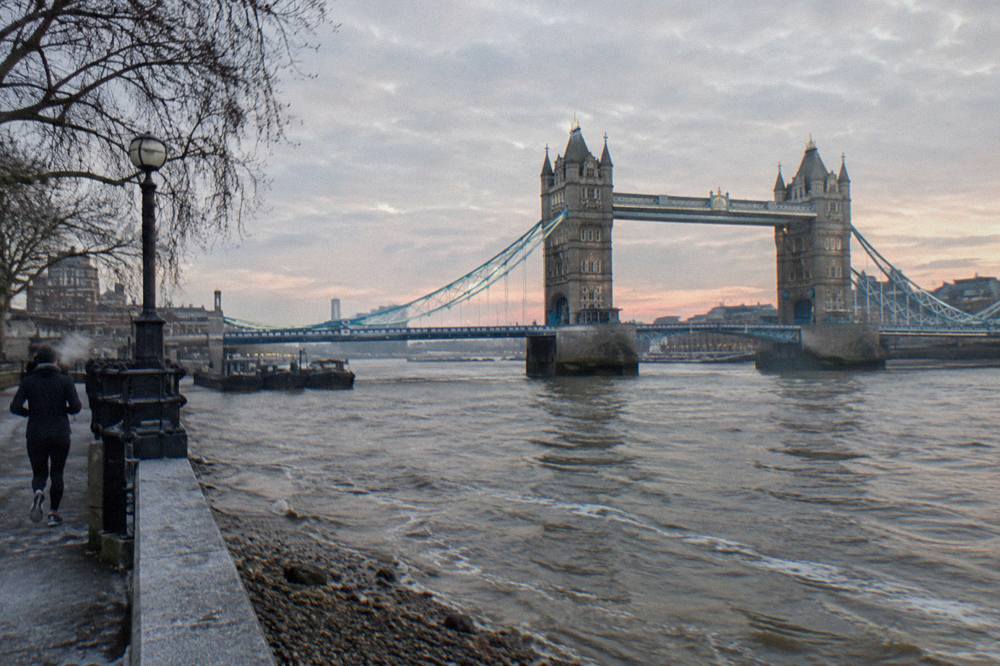
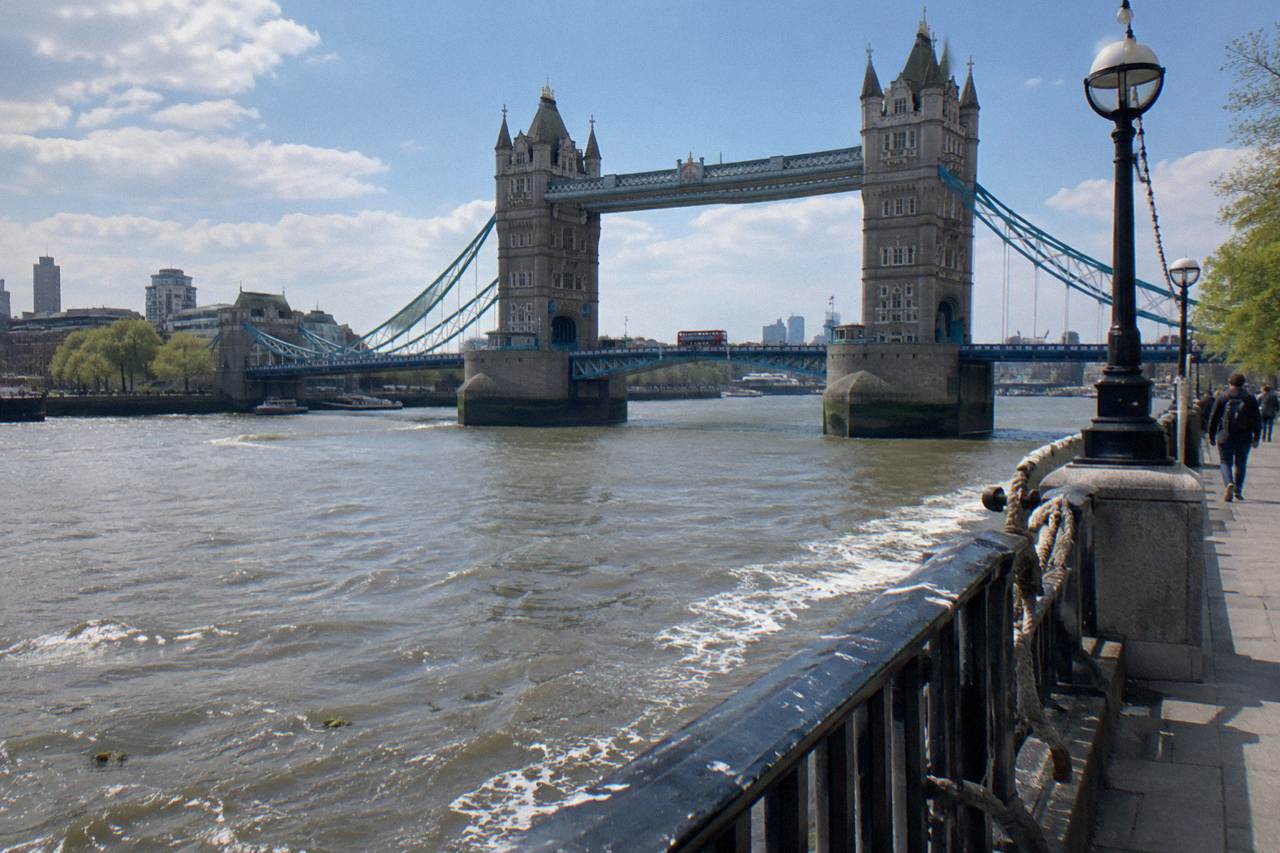
The confusion is understandable, because "Tower Bridge" names two different experiences. One is the bridge as infrastructure: two towers, a bascule roadway that lifts to let ships through, and footways on either side that anyone can use, at any hour the crossing is open, for nothing. That is the bridge most photographs show and the one most visitors mean when they ask the question.
The other is the Tower Bridge Exhibition, the visitor attraction inside the bridge's twin towers and upper walkways. That experience is run and ticketed separately, and it is the only way to stand on the high walkways, look down through the glass floor panels, and see the Victorian engine rooms. Nothing about buying that ticket changes your ability to cross the bridge below for free, and nothing about crossing for free entitles you to the interior.
The bridge's own site, towerbridge.org.uk, keeps the two clearly separated, and this site treats them as two records for exactly that reason: one free crossing, one paid exhibition, never merged. Merging them is how people end up either paying for something they thought was included, or turning up expecting a free glass floor.
If your plan is simply to walk over one of the world's most recognisable bridges and take in the river views from its footways, you need nothing but your feet. If your plan is the interior experience, that is a paid visit and the bridge's ticketing applies. The sections below break down exactly which parts fall on which side of that line.
What Does The Free Part Include?
The free part is the full pedestrian crossing of Tower Bridge: the east and west footways that run the length of the bridge at roadway level, open as public highway space, with the river views from both sides. You can cross in either direction, as many times as you like, and there is no ticket, queue system or fee of any kind attached to the footways themselves.
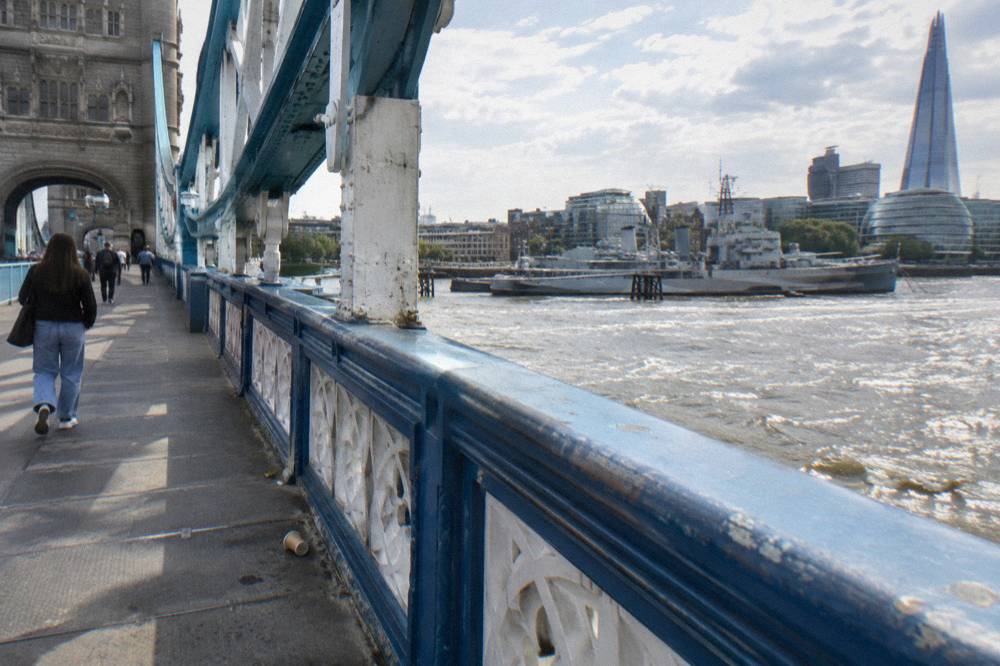
The footways are what make Tower Bridge genuinely useful as well as famous. They connect the north bank, where the Tower of London sits, with the south bank at Bermondsey and the Queen's Walk, and they carry commuters, runners and tourists alike. The view west from the crossing takes in the City of London towers and the river bends toward Westminster; the view east opens toward Docklands. All of that is part of the free crossing.
It is worth being clear about what the free part does not include, because the boundary is physical rather than administrative. The high walkways between the two towers, reached from inside, are part of the paid exhibition. The Victorian engine rooms, on the south side, are part of the paid exhibition. The glass floor panels are part of the paid exhibition. You cannot see any of those from the free footways, and no free route exists to them.
There is also a free way to see the bridge itself, which many visitors rate as highly as crossing it: viewing it from outside. The Thames path on both banks gives long sightlines of the whole structure, and if the bascules lift for a passing vessel, the lift is visible from the banks and costs nothing to watch. The lift schedule is set by river traffic, so treat any lifting as a bonus rather than a plan.
For a comparison of how the free and paid pieces stack up, the table below sets them side by side.
| Part of Tower Bridge | Free or paid | What you get |
|---|---|---|
| East and west footways | Free, open public crossing | Full walk across the bridge at roadway level, river views both sides |
| Viewing the bridge from the Thames banks | Free | Sightlines of the towers and any bridge lift from outside |
| Tower Bridge Exhibition (high walkways, glass floor) | Paid ticket | Interior walkways between the towers and the glass floor panels |
| Victorian engine rooms | Paid ticket, part of the exhibition visit | The machinery that powered the original bridge lifts |
What Do You Still Have To Pay For?
The paid part is the Tower Bridge Exhibition: entry inside the towers, the high-level walkways with their glass floor sections, and the Victorian engine rooms on the south bank. It is a single ticketed attraction run by the bridge, and the price is stated on the bridge's own ticketing page rather than repeated here. Nothing on the free footways requires that ticket.
The exhibition is the reason the question "is Tower Bridge free?" has two answers. Inside, visitors reach the upper walkways through the towers and cross between them high above the roadway, including the sections with glass floors that look straight down onto the crossing below. The engine rooms, housing the original steam machinery, complete the visit on the south side. It is a substantial experience and it is unambiguously paid: this site never describes it as free or conditionally free.
A useful framing when budgeting: the free crossing and the paid exhibition are not competing versions of the same thing. The crossing is a piece of the city you use; the exhibition is a museum inside a working bridge. Visitors with no interest in the interior lose nothing by crossing for free, and visitors who want the glass floor need the ticket, full stop. For wider context on how London splits into free and paid layers like this, the Free Attractions In London guide works through the same distinction across the city.
One caution on phrasing you may meet elsewhere: "free to visit Tower Bridge" is only true of the crossing. Treat any claim of free entry to the exhibition, the walkways or the engine rooms as wrong, and check the bridge's own site for the current ticket price and booking terms before you go.
When Is The Free Option Available?
The free footways follow the bridge's crossing availability as public highway, not an attraction's opening hours. Tower Bridge is a working bascule bridge: when the roadway lifts for river traffic, pedestrian crossings pause for the lift, and the bridge's own site carries the current information on closures and lift times. There is no ticket release, no booking window and no seasonal fee for the crossing.
This is the part of the answer that behaves differently from a museum. A free museum has opening hours and often a booked ticket; an open public crossing simply is, subject to the bridge's operation. If the bascules are raised, pedestrians wait, and when the bridge closes for maintenance, as working bridges periodically do, the crossing closes with it. Those are operational facts rather than prices, and the bridge's site is the place to confirm them for the day you plan to cross.
For the paid exhibition, availability works like any ticketed attraction: scheduled opening, ticketed entry, and the bridge's own ticketing page for times and booking. If your visit depends on the interior rather than the crossing, plan around the exhibition's published schedule, not the highway's. Check TfL for Tube service changes before you travel.
The practical takeaway: the free option is available whenever the bridge is open as a crossing, which is nearly always, and its only interruptions are lifts, maintenance and the rare closure. No planning rule from the paid attraction side, like timed tickets or advance booking, applies to the footways.
Where Does The Free Visit Start?
The free crossing starts at either end of the bridge: from the north bank at the Tower of London side, or from the south bank at the Queen's Walk side in Bermondsey. There is no dedicated visitor entrance, no gate and no meeting point, because the footways are ordinary public walkway. The paid exhibition, by contrast, has its own ticketed entrance on the bridge, which the bridge's site marks clearly.
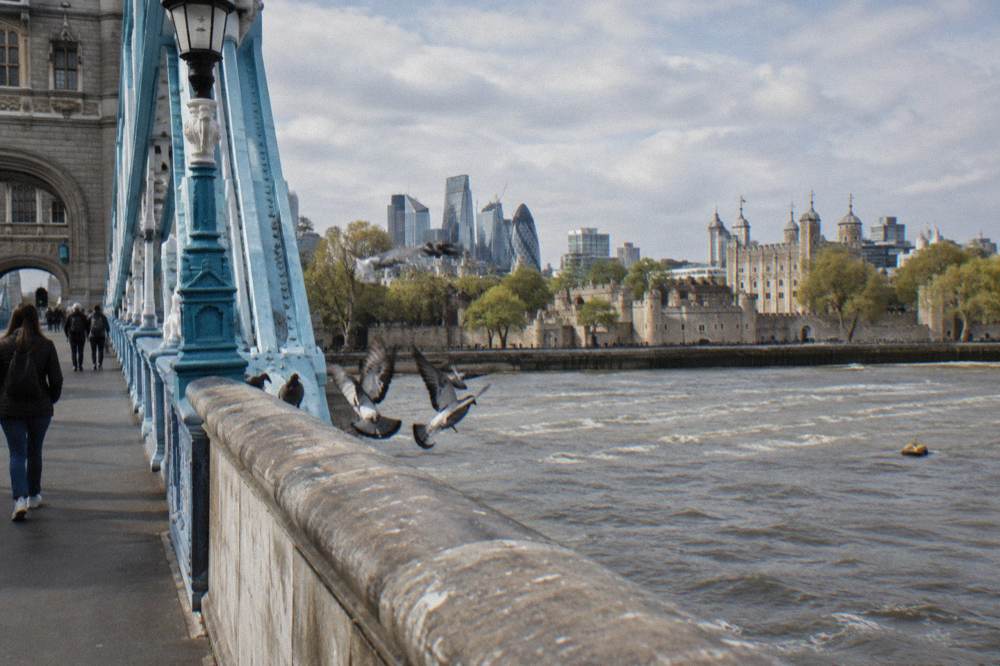
Most people cross from the north, because that is where the Tower of London sits and where the bridge meets the densest cluster of visitor sights. Approaching from Tower Hill Underground Station puts you at the north end within the City of London's eastern edge, and the crossing then delivers you onto the south bank's riverside walk. Crossing in the other direction reverses the picture and starts you on the Queen's Walk, the Thames path on the south side, which continues west toward Southwark.
The bridge's position is also why it anchors so many free walking routes in the City and along the Thames. The neighbourhood on the north side is the City of London, and the bridge marks the point where the old city meets the river's south bank. Visitors who want that context, rather than just the crossing, often join one of the free, pay what you want walks that meet nearby.
One such walk is the Tower to St Paul's Walk, a GuruWalk walk run by London with a Local Tours, which meets at Tower Hill Underground Station, the same station that serves the bridge's north end, and covers the City of London and the Thames neighbourhood over about 2 hours 30 minutes in English. It is rated 4.96 out of 5 across 962 GuruWalk reviews, and like every walk on this site it is free, pay what you want, reserved on its GuruWalk page.
A second option in the same neighbourhood is the Empire History, Adult Themes walk, a GuruWalk walk guided by Justin, which meets at Fish Street Hill by the Monument, a short way up from the bridge's north-west corner, and explores the City of London over about 2 hours in English. It carries a 4.94 out of 5 rating across 2,439 GuruWalk reviews, and its adult-themes framing is stated plainly on its own GuruWalk page, so read the GuruWalk page before booking it for a family group.
For planning a wider free day around the crossing, the City Of London Free Things guide maps what else in the old city costs nothing, from the Royal Exchange's courtyard to the churchyards that sit between the towers. The Monument, whose own viewing gallery is a paid climb, stands in the same neighbourhood and is covered in its own question page.
Which Free Walking Tours Cover This?
Several free, pay what you want walks meet in the immediate neighbourhood of Tower Bridge, all run on GuruWalk except one freetour.com walk in Westminster. This site lists 73 such walks in London, each reserved on its platform, and the City of London and Thames group is the one anchored on this part of the river. None is a bridge tour: each is introduced by its guide, meeting point and neighbourhood, exactly as its listing states.
The natural fit is the City of London and the Thames group described above, with the Tower to St Paul's Walk and the Empire History walk as the two with the deepest review pools in that neighbourhood, 962 and 2,439 GuruWalk reviews respectively. Both meet within the City, at Tower Hill and at Fish Street Hill, and both are English-language walks of roughly two to two and a half hours. The Thames Walk, Four Languages walk, a GuruWalk walk guided by Alex and rated 4.91 out of 5 across 91 reviews, even meets at the Tower Bridge Engine Rooms and Gift Shop, as close to the bridge as a meeting point gets, and runs in English, Spanish, Italian and Portuguese.
If your day pairs the bridge with the south bank rather than the City, the South Bank Social History walk is the strong pick: a GuruWalk walk by Justin, meeting at Borough High Street by London Bridge, rated 4.96 out of 5 across 479 GuruWalk reviews, 2 hours in English. And for a Spanish-language day in the same district, the Historic Route, Spanish Guide walk meets at Temple Underground Station, rated 4.99 out of 5 across 703 GuruWalk reviews over 3 hours.
This site, London Free Things To Do, is an independent publisher and is not affiliated with GuruWalk or freetour.com; every walk named here is a real listing run by an independent local guide. The walks are free, pay what you want, and you reserve your place on the walk's own page on its platform. That is the whole mechanics of it, and no money figure belongs anywhere near them.
For a fuller picture of how these walks work, the Free Walking Tours In London guide explains the model, and the companion question page on how free walking tours work answers the mechanics directly.
Mistakes That Trip People Up At Tower Bridge
The commonest mistake is assuming the glass floor walkways are part of the free crossing, then budgeting a free afternoon around a paid exhibition. The second is the reverse: paying for the exhibition believing the crossing requires it. The third is confusing Tower Bridge with London Bridge, a different bridge entirely, which sends people to the wrong river crossing. All three are avoidable with the free-versus-paid split in mind.
The glass floor mistake is the expensive one. The high walkways, the glass panels and the engine rooms are one ticketed exhibition, and there is no free route to any of them. Visitors who only want to say they walked over Tower Bridge should plan for exactly that, the free footways, and treat the interior as a separate decision with its own budget line.
The reverse mistake is rarer but real: some visitors assume that because the bridge is famous and ticketed inside, crossing must also need a ticket, and they buy exhibition entry just to get across. It does not. The footways are a public crossing, open and free, and you can walk over Tower Bridge without ever engaging with the exhibition's ticketing.
The name mix-up deserves its own warning because it is genuinely common: Tower Bridge is the ornate bascule bridge by the Tower of London, and London Bridge is the plainer bridge upriver. If a map or a local points you to London Bridge, you will still end up on the south bank, but you will have walked over the wrong structure. The two are distinct crossings, and only Tower Bridge has the towers, the walkways and the exhibition.
Common Questions On This Topic
Is Tower Bridge Free?
Yes, for crossing on foot. The east and west footways are an open public crossing with no ticket or fee. The Tower Bridge Exhibition inside the towers, including the high walkways and glass floor, is a separate paid attraction with its own ticket.
Can You Walk Across Tower Bridge For Free?
Yes. The footways are public highway and cost nothing to use, in either direction. You may briefly wait if the bascules lift for river traffic, but no fee, ticket or booking exists for the crossing itself.
Is The Tower Bridge Exhibition Included With The Free Crossing?
No. The exhibition is a standalone paid visit covering the interior walkways, the glass floor panels and the Victorian engine rooms. Its price and booking terms are on the bridge's own site, and the free footways give no access to any of it.
Is The Glass Floor At Tower Bridge Free?
No. The glass floor sections sit on the high-level walkways inside the paid exhibition. Nothing in the free crossing includes them, and they are not visible from the footways below.
Are There Free Walking Tours Near Tower Bridge?
Yes. GuruWalk walks including the Tower to St Paul's Walk, meeting at Tower Hill, and the Empire History walk, meeting at Fish Street Hill by the Monument, both run in the neighbourhood, free and pay what you want. Each is reserved on its own GuruWalk page.
Is Tower Bridge The Same As London Bridge?
No. Tower Bridge is the bascule bridge with twin towers beside the Tower of London; London Bridge is a separate, plainer crossing upriver. Only Tower Bridge carries the paid exhibition, and mixing up the two sends you to the wrong bridge.