Is The Tate Modern Free?
Yes, the Tate Modern's permanent collection is free, special exhibitions are paid. Here is exactly what the free visit includes, what costs money and the free walks nearby.
In Short
Yes, entry to the Tate Modern's permanent collection is free. You do not buy a ticket for the collection displays. Special exhibitions are separate and paid in every case, and the gallery closes 24 to 26 December. The building sits on the South Bank, and free walking tours meet in the surrounding streets.
This question sits inside the Tate Modern and the South Bank guide.
Is The Tate Modern Free?
Yes, the Tate Modern is free to enter for the permanent collection, and no ticket is needed for those displays. The gallery states free entry for the collection on its own site. What is not free are the special exhibitions, which are ticketed in every case, and a few paid extras such as guided tours and the lifting of the Blavatnik buildings' viewing level access rules on event days. Treat "free" as covering the collection, not everything inside the building.
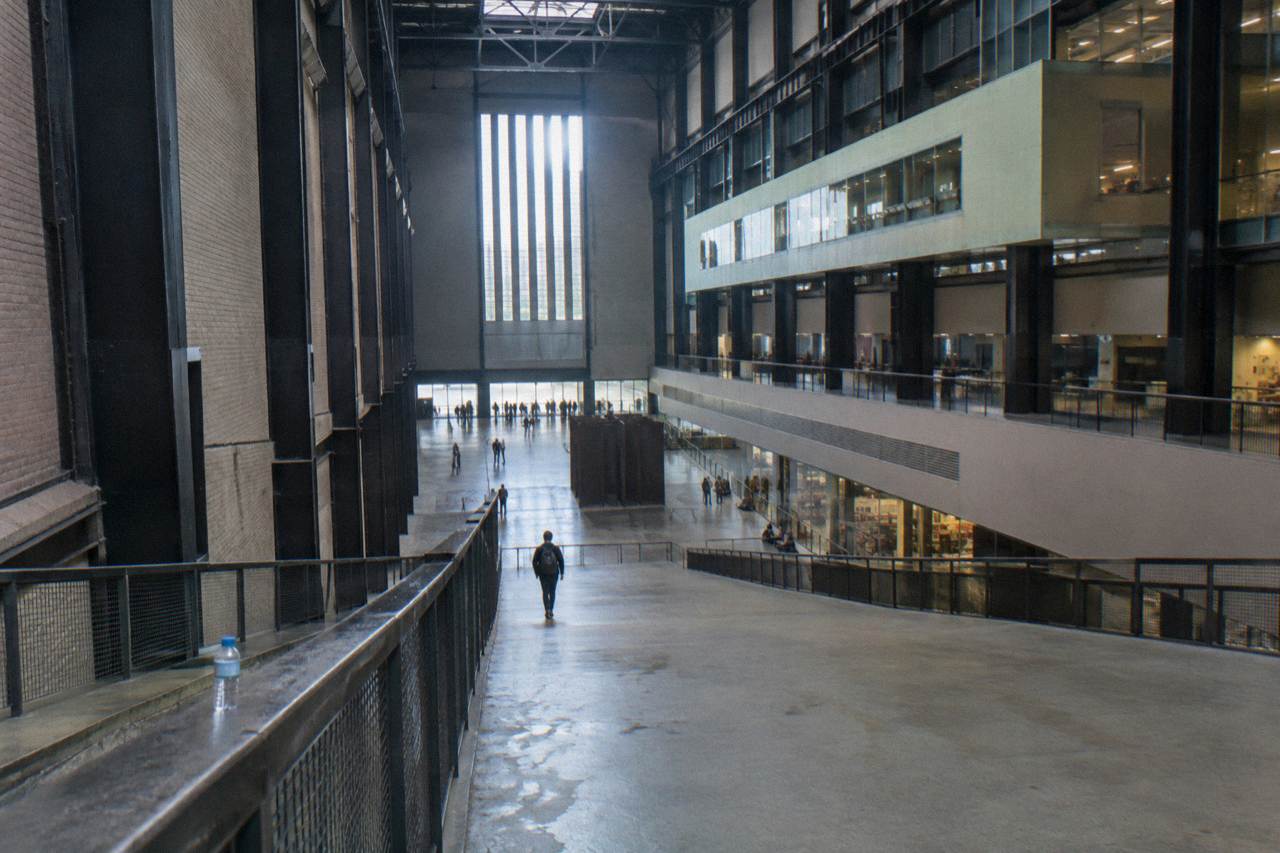
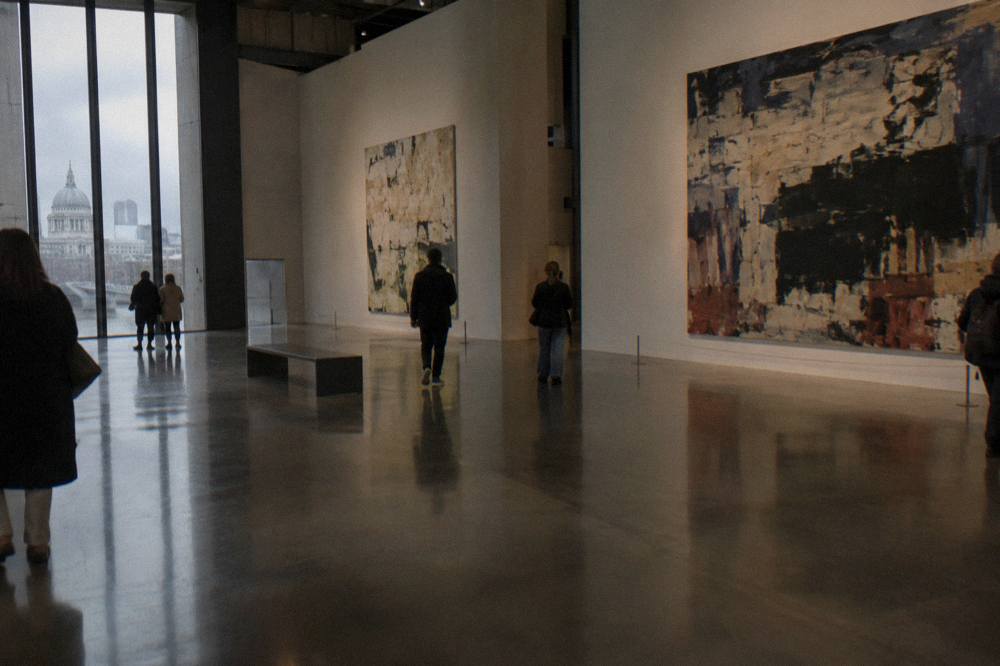
That single sentence answers the search query, but the honest version needs the split spelled out, because the Tate Modern is one of those London attractions where the free part and the paid part share a building, a lobby and a queue. The free part is large: the permanent collection fills the Boiler House and the Blavatnik extension, and it includes the Turbine Hall commissions that most visitors come for. You can spend hours in the collection and pay nothing.
The paid part is equally real. The gallery's temporary exhibitions, such as the Frida Kahlo exhibition running to 3 January 2027, carry their own ticket prices and their own timed entry. Visitors who arrive expecting "the Tate Modern is free" and walk up to a ticketed exhibition desk are the ones who leave surprised, so it pays to know which side of the building your interests fall on before you go.
The gallery's own visitor information at tate.org.uk is the place to confirm current opening arrangements, and it states the free-entry position for the collection plainly. This site's figures below come from that page and from the gallery's seasonal listings. Nothing here needs a membership, a pass or a booking for the collection itself.
Once the collection question is settled, the natural next move is the neighbourhood: the Tate Modern sits on the South Bank of the Thames, one of the densest free-sightseeing stretches in the city. The free walking tours in London guide covers how the pay-what-you-want system works across the city, and several of those walks meet within this district.
If you want a structured walk in this exact area, these three free options are a good shortlist:
Each of those is free, pay what you want, and reserved through its own listing. The Tower to St Paul's Walk is a GuruWalk listing rated 4.96 out of 5 across 962 GuruWalk reviews, meeting at Tower Hill Underground Station for two and a half hours in English. The Essentials, Under Two Hours walk is also on GuruWalk, rated 4.75 out of 5 across 5,346 GuruWalk reviews, meeting at Apsley Way near Wellington Arch. Essentials in 1.5 Hours meets at the Equestrian Statue of Charles I in Trafalgar Square and is rated 4.85 out of 5 across 2,274 GuruWalk reviews, also on GuruWalk.
What Does The Free Part Include?
The free part includes the entire permanent collection across both gallery buildings, the Turbine Hall commissions, the general seating and café spaces, and simply walking into the building. The Tanks, the subterranean performance spaces, are part of the collection galleries when they are open. Entry to the collection is free every day the gallery is open, with no booking needed for the collection displays.
The permanent collection is the draw, and it is genuinely enormous. The free displays span international modern and contemporary art, arranged across the Boiler House floors and the Blavatnik extension. The Turbine Hall, the vast entrance chamber created from the power station's old turbine housing, hosts a rotating commission that is free to view whenever the hall is open, and it is the single most photographed interior in the building.
The free visit also includes the walk-in experience of the building itself. The former Bankside Power Station conversion is one of London's most dramatic pieces of adaptive architecture, and moving through it costs nothing. The viewing level in the Blavatnik building offers one of the better free city panoramas, and this site covers it alongside the free viewpoints in London elsewhere.
It helps to compare what free gets you against what stays paid, so the table below keeps the split in one place.
| Part of the visit | Free or paid | What you get |
|---|---|---|
| Permanent collection, both buildings | Free | All collection displays, every open day |
| Turbine Hall commissions | Free | The current large-scale commission |
| Special exhibitions | Paid | Ticketed, timed entry, separate desks |
| Frida Kahlo exhibition, to 3 Jan 2027 | Paid | Ticketed special exhibition |
| Viewing level | Free | Panoramic viewing level in the Blavatnik building |
| Cafés, shops, guided tours | Paid | Food, retail and bookable tours |
One point of technique: because the collection is free but popular, the gallery can feel full on wet weekends and school holidays. There is no entry price to avoid, but arriving with the whole day ahead of you rather than a fixed hour makes the free visit far more relaxed. The paid exhibitions are the ones with timed slots, and those slots are what sell out.
The free collection is also the reason this gallery anchors an entire free day out on the South Bank. The stretch between Waterloo and London Bridge holds the Southbank Centre's Winter Market, free to enter from 2 November 2026 to 3 January 2027 and closed 25 December, 31 December and 1 January, per the Southbank Centre's seasonal listing. A free gallery plus a free-to-enter market plus the river path is a complete day that costs nothing at the door.
What Do You Still Have To Pay For?
You still have to pay for special exhibitions, which are ticketed in every case, and for the cafés, restaurants, shops and bookable guided tours inside the building. Group and private tour options are paid products. Nothing in the paid list blocks the collection: you can skip every paid item and still see the full permanent displays, the Turbine Hall and the viewing level.
The exhibitions are the main paid item and the main source of confusion. A visitor reading "the Tate Modern is free" and then finding a ticket desk for a major retrospective feels misled, so the clean statement is this: the collection is free, the exhibitions are not, and both facts live on the gallery's own site. The Frida Kahlo exhibition, running to 3 January 2027, is the current paid headline show, and its tickets are separate from anything else in the building.
Beyond exhibitions, the paid list is the usual museum set. Food and drink in the cafés and restaurants, everything in the shops, and any officially bookable tour or workshop carry their own prices. Those are optional in the plain sense: nobody needs them to enjoy the collection, and the free seating and free displays are not conditional on buying anything.
A useful planning move is to decide before arrival whether an exhibition matters to you. If it does, book it through the gallery's site for a timed slot. If it does not, the free visit needs no booking, no ticket and no planning beyond turning up during opening hours. That asymmetry surprises people who assume a famous gallery must have some reservation system for the free part, and it is one of the reasons the Tate Modern ranks among the best free things in the city, a theme this site's London Free Things To Do homepage covers in depth.
Should you build the visit around a free walk instead of paying for a gallery tour, the South Bank option below is the natural fit.
The South Bank Social History walk, run by guide Justin on GuruWalk, is free, pay what you want, meets at Borough High Street by London Bridge and runs two hours in English. It is rated 4.96 out of 5 across 479 GuruWalk reviews, and it covers the same riverside streets the gallery sits among: pubs, prisons and the social history of the Bankside district. This site is not affiliated with GuruWalk; the walk is an independent guide's own listing.
When Is The Free Option Available?
The free collection is available during all gallery opening hours, with no ticket or booking for those displays. The gallery closes 24 to 26 December, per the closure statement on the gallery's own pages, and the special exhibitions keep their own dates and timed slots. Seasonal events around the building, like the Winter Market, keep their own calendars, which run into early January 2027.
Opening hours for the gallery are on the gallery's own site, and the honest instruction is to check there before travelling, since hours shift around holidays. The gallery closes 24 to 26 December, the same closure pattern the National Gallery, V&A and Natural History Museum state on their own pages. Plan around those three days if your trip falls at Christmas. The rest of the planning pages sit on London Free Things To Do.
The paid exhibitions follow their own calendars. The Frida Kahlo show closes 3 January 2027, which means the first days of January are the last chance for that ticket. Exhibition closing weeks are also when timed slots tighten, so if a paid show is on your list, the booking is better made ahead rather than on the day.
Around the gallery, the seasonal free calendar is running now. The Oxford Street lights were switched on 9 November 2026 and run to about 5 January 2027, Regent Street's lights began 5 November 2026, and the Southbank Centre Winter Market, free to enter, runs 2 November 2026 to 3 January 2027 with closures on 25 December, 31 December and 1 January. A winter visit therefore pairs a free collection with free lights and a free-entry market on the same stretch of river.
One caution that belongs in the same sentence as any winter travel plan: check TfL for Tube service changes before you travel.
Where Does The Free Visit Start?
The free visit starts at the main entrance on the South Bank, on the river side of the building, with additional access through the Blavitnik extension and the Turbine Hall doors. No ticket line exists for the collection; you walk in. The gallery sits on the Bankside stretch of the Thames, opposite the City, and the surrounding streets are free public space in their own right.
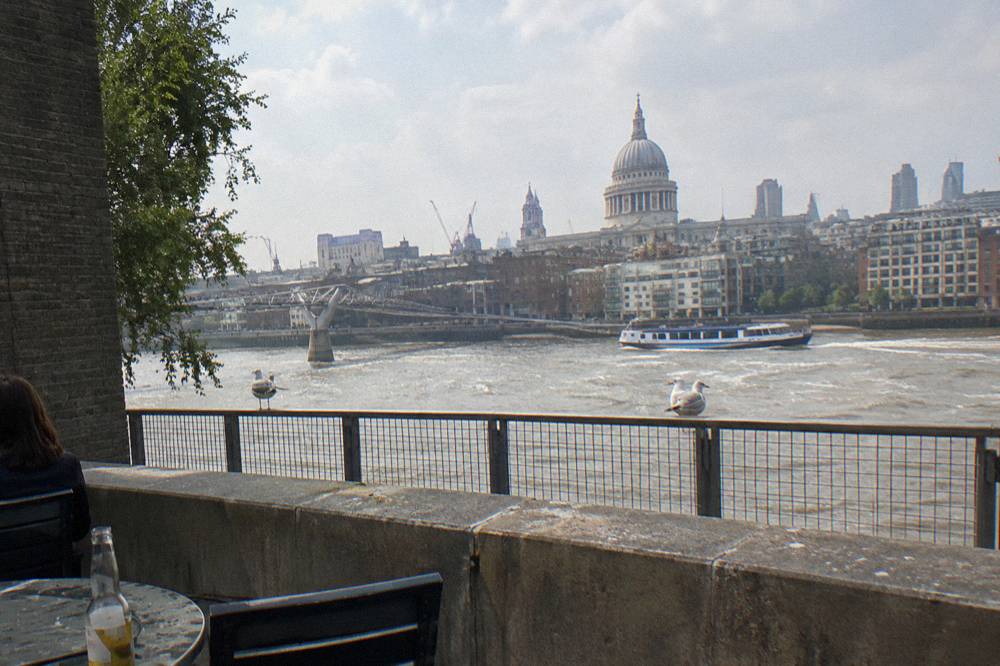
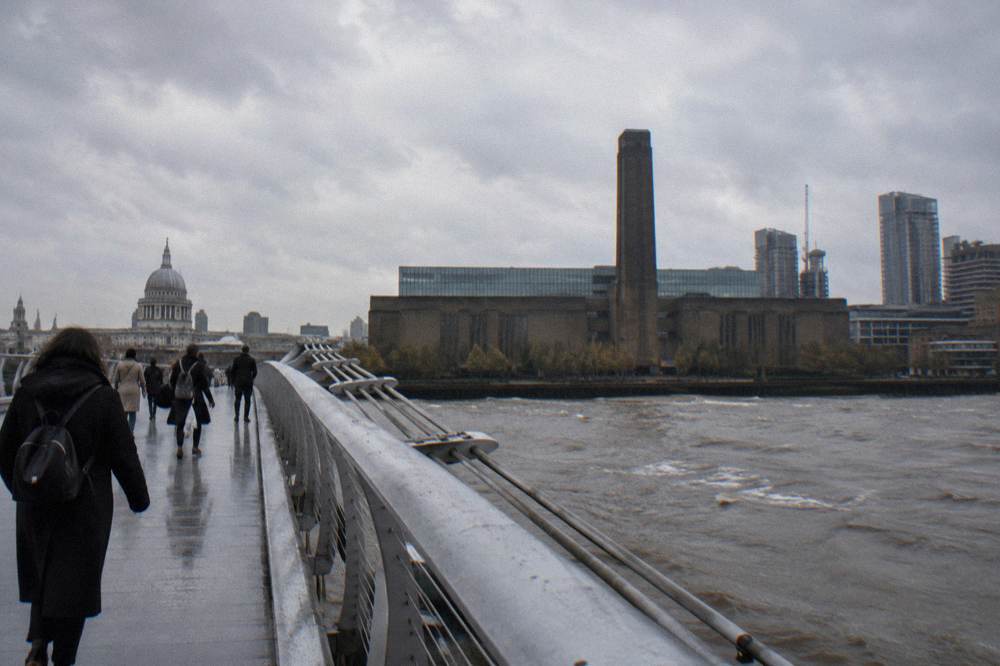
Approaching from the river gives the building its full effect. The former power station frontage faces the Thames, the Millennium Bridge lands at the door from the opposite bank, and the free public realm around the gallery, the riverside walk, the bridge and the foreshore path, costs nothing and needs no entry point at all. Visitors who combine the bridge crossing with a collection visit get two of London's free landmarks in one movement.
For orientation, the collections sit in two linked buildings. The Boiler House is the original conversion, arranged in floors off the Turbine Hall, and the Blavatnik extension rises at the rear with its own displays and the viewing level. Both are free for the collection, both are reached from the same entrances, and neither needs a separate decision at the door. The only fork in the road is the exhibition ticket desk, which you can walk straight past.
The wider district rewards the same free instincts. The Tate Modern and the South Bank guide maps the full free circuit, from the gallery to the river path and the market, and the city of London free things guide covers the opposite bank, one bridge away. Crossing to the City side puts St Paul's Cathedral in front of you, and its position is clear on this site's own page: St Paul's is free only to attend worship, paid to sightsee, and the two are never the same visit.
Which Free Walking Tours Cover This?
No free walking tour is a Tate Modern tour, but several free, pay what you want walks operate in the districts around the gallery: the South Bank, the City across the river and the Westminster stretch downstream. Walks are best matched by meeting point and neighbourhood rather than by landmark promises. Each listing below is introduced only by its platform, guide, meeting point and neighbourhood, which is what each listing states.
The South Bank walk is the closest fit. South Bank Social History, run by Justin on GuruWalk, meets at Borough High Street by London Bridge, two hours, English, rated 4.96 out of 5 across 479 GuruWalk reviews, free and pay what you want. The Bankside and Borough streets it works from are the gallery's own neighbourhood, and the walk's social-history framing, pubs and prisons, sits well beside a modern art collection built from an old power station.
Across the river, the City walks start from Tower Hill and the Monument. Empire History, Adult Themes, run by Justin on GuruWalk, meets at Fish Street Hill by the Monument, two hours, English, rated 4.94 out of 5 across 2,439 GuruWalk reviews. Its subject, from sugar and slaves to tea and opium, is the imperial money that built much of the visible City, and its meeting point puts it within the same riverside world as the gallery, on the opposite bank.
The matching question for Spanish speakers is covered elsewhere: Tour Revolution's Classic Route, Spanish Guide, meets at Embankment Underground Station, three hours, rated 4.95 out of 5 across 4,403 GuruWalk reviews, and London with a Local Tours' Ripper Victims and Conspiracy meets at Tower Hill Underground Station, two hours in English, rated 4.84 out of 5 across 1,529 GuruWalk reviews. Both are page-only listings on this site, meaning they have their own pages rather than cards here, and both are found through GuruWalk.
Every walk named in this article is free, pay what you want, and reserved through its own page on GuruWalk or freetour.com. This site is an affiliate, not an operator: no walk here is run by the site, and naming GuruWalk or freetour.com each time is how that stays honest.
Mistakes That Trip People Up At The Tate Modern
The mistakes that cost money or waste a visit are treating a ticketed exhibition as free, assuming the gallery is open across Christmas, mixing up the Tate Modern with the paid royal attractions on the opposite bank, and arriving with a fixed hour for a collection that needs no booking. Each one is avoidable with a single fact: collection free, exhibitions paid, 24 to 26 December closed, and no ticket for the free part.
The first mistake is the exhibition one, and it is the most common. The statement "the Tate Modern is free" is true for the collection and false for every special exhibition, including the Frida Kahlo show to 3 January 2027. Decide before you arrive whether the exhibition is part of your plan, and if it is, book its timed slot. If it is not, walk past the desk.
The second is the calendar mistake. The gallery's 24 to 26 December closure matches the pattern stated by the National Gallery, the V&A and the Natural History Museum on their own pages, and a Christmas itinerary that assumes open doors on those three days fails at several buildings at once. The Winter Market across the river closes 25 December, 31 December and 1 January too, so late-December plans need the closures built in from the start.
The third is a district-planning error rather than a ticket error. Visitors sometimes bundle the Tate Modern with Westminster Abbey or St Paul's under a "famous London sights, all free" assumption. The Abbey is free only to attend Evensong, and St Paul's is free only to attend worship, and both are paid for sightseeing. The are London museums free post keeps the full national-museum picture in one place.
The fourth is over-planning the free part. No booking, ticket or time slot is needed for the collection, so the visit can be dropped into any open day at any hour. The paid exhibitions are the opposite, and treating the whole building like the collection, walking up to a sold-out show at 3pm, is how a free day turns disappointing.
Common Questions On This Topic
Is The Tate Modern Free?
Yes, entry to the permanent collection is free, and no ticket is needed for the collection displays. Special exhibitions are separately ticketed and paid in every case. The gallery closes 24 to 26 December, so check the gallery's own site for hours before a holiday visit.
Do You Need To Book Tickets For The Tate Modern?
No booking is needed for the permanent collection, which is free and open during gallery hours. Special exhibitions are the exception: they are paid, timed and booked separately. If an exhibition is on your list, book it ahead through the gallery's site.
How Much Are Tate Modern Exhibitions?
Exhibition prices are set by the gallery and change per show, so this site does not print a figure. What is fixed is the split: the collection is free, every special exhibition is paid. Current prices sit on the gallery's own exhibition pages.
What Can You See For Free Inside?
The permanent collection across both buildings, the Turbine Hall commissions and the Blavatnik building's viewing level are all free. The Tanks, the performance spaces, are part of the free galleries when open. Cafés, shops and bookable tours are the paid extras.
Is The Tate Modern Open On Christmas Day?
No. The gallery closes 24 to 26 December, a closure window its own pages state alongside the other free national galleries. The Southbank Centre Winter Market also closes 25 December, 31 December and 1 January, so plan river-side days around those dates.
Are There Free Walking Tours Near The Tate Modern?
Yes. South Bank Social History, a free pay what you want GuruWalk by guide Justin, meets at Borough High Street by London Bridge and runs two hours, rated 4.96 out of 5 across 479 GuruWalk reviews. City walks from Tower Hill and the Monument start across the river.